Standard Podiatry
The regular foot care provided by a podiatrist (foot specialist) to maintain healthy feet and prevent or manage common foot problems — especially for people with conditions like diabetes, poor circulation, or limited mobility.


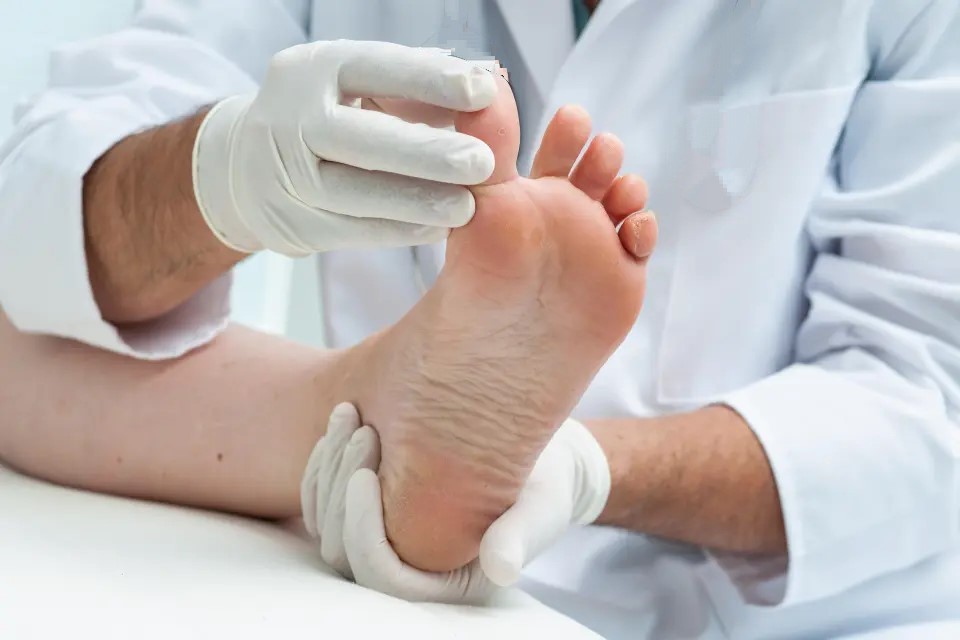

The regular foot care provided by a podiatrist (foot specialist) to maintain healthy feet and prevent or manage common foot problems — especially for people with conditions like diabetes, poor circulation, or limited mobility.
Foot Assessment
• Checking skin condition, nails, circulation, and sensation.
• Identifying calluses, corns, ulcers, infections, or deformities.
• Assessing footwear and gait (how you walk).
Nail Care
• Trimming and thinning thickened or ingrown toenails.
• Managing fungal or damaged nails.
Callus and Corn Removal
• Safely reducing hard skin and corns to relieve pressure or pain.
Skin Care
• Treating dry, cracked heels or minor infections (like athlete’s foot).
Advice and Education
• Guidance on daily foot care, proper footwear, and orthotics if needed.
• Advice on managing risk factors (e.g., for diabetic foot ulcers).
Follow-Up Schedule
• Frequency varies:
Every 6–12 weeks for ongoing issues.
Every 3–6 months for preventive care.
More often for diabetic or vascular patients.

Sport Podiatry is a specialist field of podiatry focused on diagnosing, treating, and preventing foot, ankle, and lower-limb injuries related to sports, exercise, and active lifestyles. It combines knowledge of biomechanics, sports medicine..
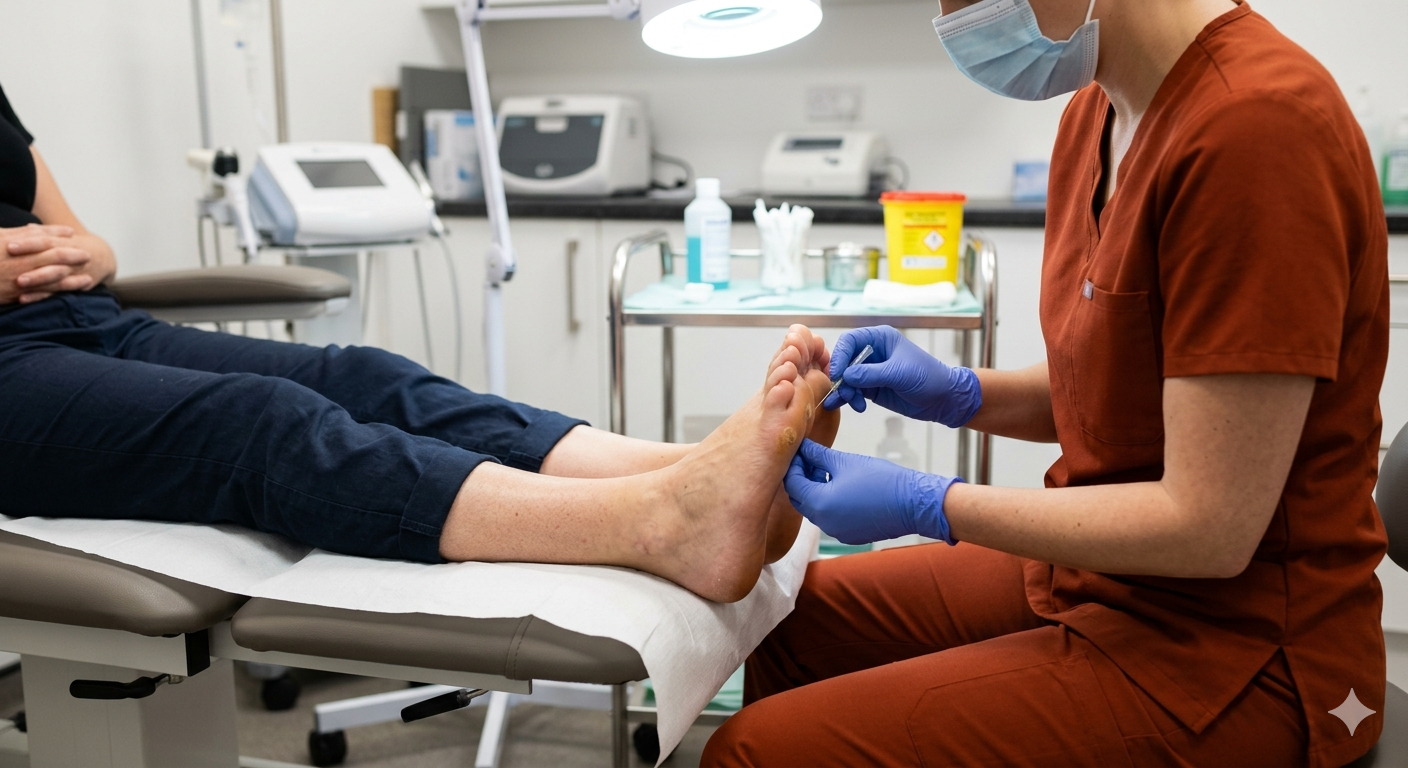
Verruca needling (also called needling therapy for plantar warts) is a minimally invasive treatment used to treat stubborn or recalcitrant verrucae (plantar warts caused by the human papillomavirus, HPV). The technique is designed...
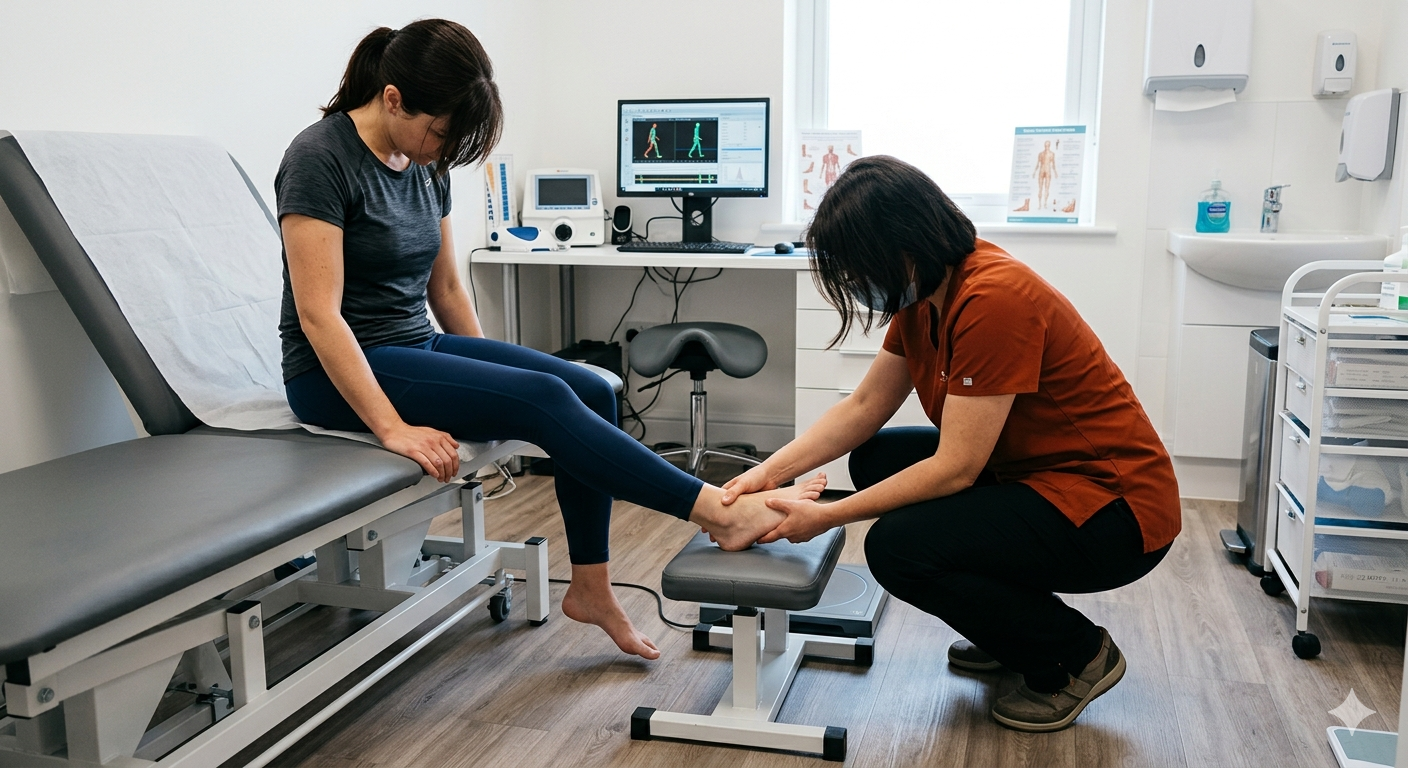
A biomechanical foot assessment is an evaluation performed by a podiatrist to analyze the structure, function, and movement of the feet and lower limbs. The goal is to identify abnormal mechanics that...